Organisations involved
Implementer

Referring partner

Our mission
The Cape Parrot is threatened mainly by habitat loss and disease, with only around 1,800 individuals left in the wild. They, along with many other species, are dependent on Mistbelt forest habitat. However, this habitat near Hogsback, Eastern Cape, has been degraded by historical indigenous tree felling and lost by the conversion of indigenous forest to exotic pine plantations, with forest margins also affected by alien invasive plants.
Significant areas within these forests have become increasingly degraded due to the spread of alien invasive plants (AIPs), specifically Black Wattle (Acacia mearnsii). While this species plays an important role in providing firewood and building materials for local communities, it is an aggressive invader, resulting in various adverse ecological impacts when unmanaged. This informal commercial market has led to the clear-cutting of mature Wattle stands along forest edges and river banks. While the socio-economic value derived from the use of this invasive species is significant, the unmanaged nature of this harvesting threatens to reverse the forest naturalisation underway within these mature Wattle stands and drive aggressive secondary invasion.
In partnership with the Wild Bird Trust’s Cape Parrot Project in the Eastern Cape of South Africa, the Greenpop Foundation has been reforesting patches of degraded Amatole forest since 2019. By planting indigenous trees, this work serves to restore and expand the habitat of the endangered Cape Parrot
Accepting volunteers
Yes | [email protected]Funding campaign*
Yes | https://greenpop.org/donate/Classification
- Forests
- Mountains
- Increases Health & Wellbeing
- Mitigates Climate Change
- Protects Freshwaters
- Reduces Disaster Risks
- Safeguards Biodiversity
- Supports Livelihoods
12
Employees26
VolunteersImpact
Trees planted: 18,500
Species planted: 23
Community nurseries established: 3
Growers supported through community nurseries: 43
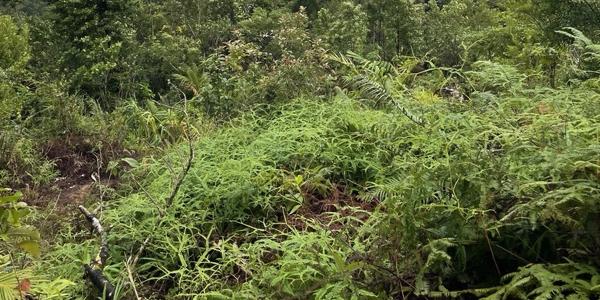
The forest restoration work conducted under this project has resulted in project sites with evident decreases in the density of invasive alien stands, increased growth of planted trees and increased ground cover. These observations are supported by monitoring data which show that the planted tree height and canopy cover have increased and the proportion of invasive species and bare ground cover have decreased since project inception, while the proportion of ground cover comprising indigenous species has increased. These are promising signs of the ecological recovery of the project sites.
While the management of alien invasives primarily involves their removal, enough trees have been retained to sustain the nurse stand function they have often played in the ecosystem, and are gradually thinned over subsequent years. Shade intolerant indigenous species planted within created canopy gaps do well, and tend to create pockets of green across the site, which it is hoped will attract pollinators and seed dispersers to the site as they mature. These clusters also provide a good space to introduce indigenous mycorrhiza into the soil.